
Emeritus Professor Ross McKenzie
Emeritus Professor of Physics at the University of Queensland
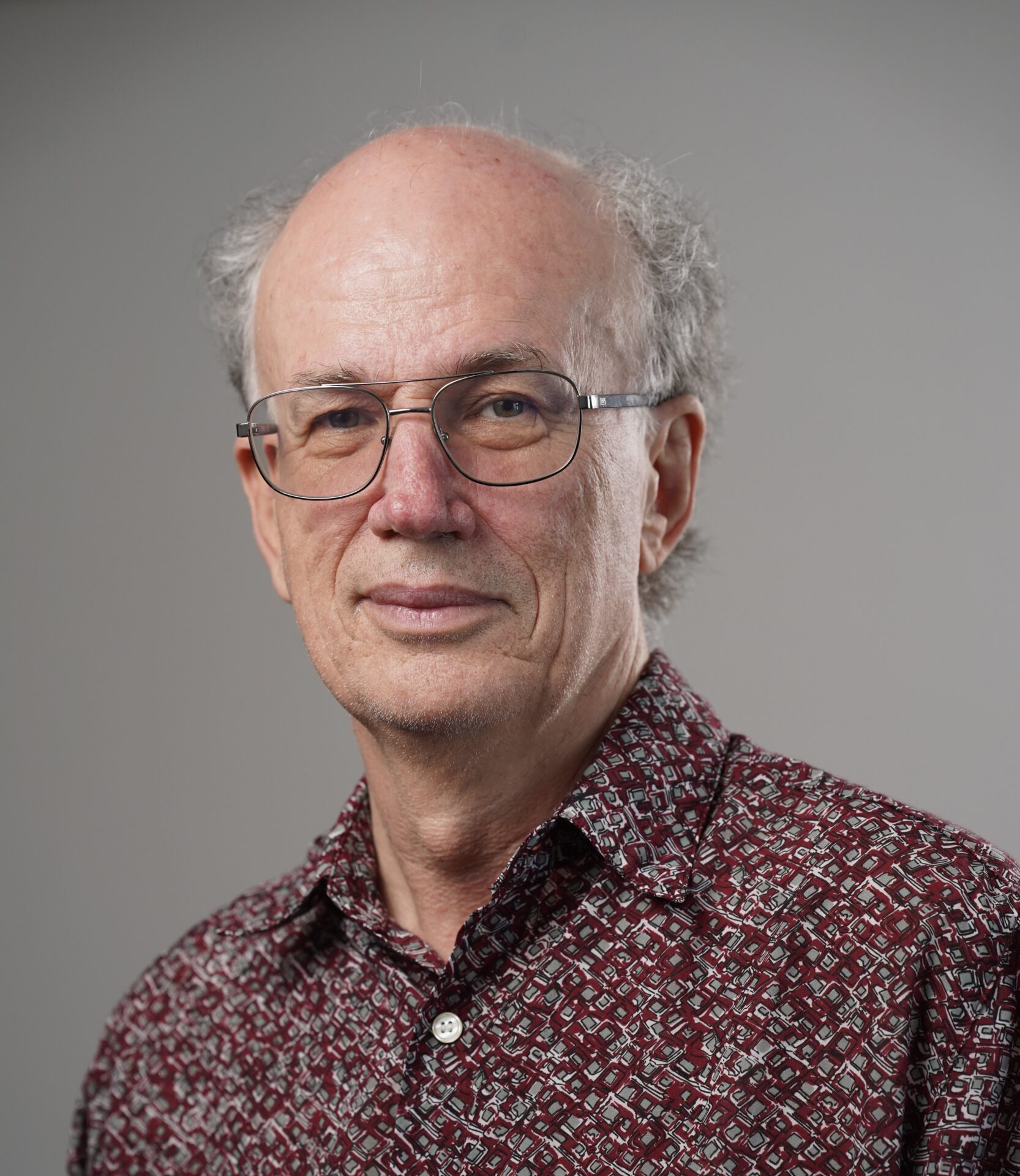
Ross McKenzie is an Emeritus Professor of Physics at the University of Queensland. He received his BSc from the Australian National University and an MA and PhD from Princeton University. From 2008 to 2012, he held an Australian Professorial Fellowship from the Australian Research Council. From 2013-2015 he was a Vice-Chancellors Senior Research Fellow.
From 2020-2024, he worked part-time for the International Fellowship of Evangelical Students, helping facilitate the Logos and Cosmos Initiative, which stimulated science and theology discussions in Latin America and Francophone Africa.
His main research projects have been in the theory of condensed matter and of chemical physics. Topics that he has worked on include: Models for strongly correlated electron materials such as organic and cuprate superconductors; Magnetoresistance of layered metals; Excited electronic states of organic molecules; Hydrogen bonding; Emergent phenomena in complex systems; and the relationship between science and theology.
Ross is married to Robin and has two adult children. He enjoys writing blogs, including Soli Deo Gloria: Thoughts on theology, science and culture, a blog related to his scientific research, Condensed Concepts, and being part of the “Holy” Scribblers.
Ross has taught postgraduate courses on science and theology at seminaries in Australia, South Asia, and Eastern Europe. Some lectures are available at https://www.youtube.com/@rossmckenzie2793.
Ross is an ISCAST Fellow.
Links to publications
Condensed Matter Physics: A Very Short Introduction (Oxford University Press, 2023)
His articles on science and theology
Emergence: from physics to biology, sociology, and computer science
Journal articles at ORCID
Public speaking
Ross has given talks about the relationship between science and Christianity to diverse audiences in Australia, Europe, Africa, Latin America, and South Asia. Groups addressed have ranged from primary school children in government schools to university students and faculty. He has also given talks about mental health in churches, universities, and CSIRO.
Outlines of talks and the slides are available on his blog.