
This event has passed
When
Thursday 11th Jun 2026 @ 6:30 pm –
Thursday 23rd Jul 2026 @ 7:30 pm
Where
Online (Zoom)
The old formula of evolution by natural selection is undergoing pressure. The idea that all change over many aeons occurred through random mutation followed by the survival of the fittest has been modified, expanded upon, and, in some ways, upended in recent decades. Convergence and constraints, evo devo, the ubiquity of altruism in the mammalian tree, cooperation as a driver of development and epigenetics are among the emphases that subtly change our paradigm of evolution.
In this six-part series, the ISCAST-NZCIS Conversations bring together international biologists and theologians to highlight newer understandings of evolution and their repercussions for theology.
Details
- Thursday nights, 11, 18, 25 June and 9, 16, 23 July on Zoom
- 6:30–7:30 p.m. AEST / 8:30–9:30 p.m. NZST
- Note: There will be no session on 2 July
Registration
For this Conversations series, one ticket gives you access to all six sessions.
- $40 General
- $30 ISCAST or NZCIS Member
- Free Student
Not yet a member? Join ISCAST or NZCIS today.
Registered participants will also receive early access to recordings of each session.
Conversations
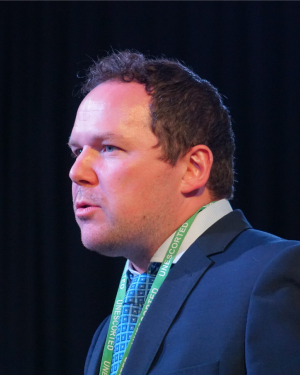
Christianity and Today’s Evolutionary Biology: Understanding the Landscape
11 June — Samuel McKee
Two converging challenges risk overwhelming the dialogue around Christianity and evolution. Firstly, biology has exploded into a new data revolution in the past decade. As the life sciences have never been hotter, the inability to accurately communicate where the science is has caused problems for the public. We must better understand what today’s evolutionary biology is. Secondly, a great deal of misinformation and confusion has emerged in Christian circles around the state and implications of evolution, largely as a result of popular creationism and Intelligent Design. Twenty years on from the Kitzmiller v Dover trial, the penetrance of these ideas into Christian culture still holds sway. For theologians to engage with evolution, they must understand the landscape. Samuel McKee will address these two points and ask what the best step forward for this area of science and religion is.
Bio
Samuel McKee is a researcher in cancer genomics at the University of Reading and a doctoral candidate in the history and philosophy of science at Manchester Metropolitan University. He holds degrees in genetics and genomic medicine from Cambridge, theology from the University of Chester, and molecular biology from Birkbeck. He serves on the board of Christians in Science, is an ISCAST Fellow, and is assistant editor of the journal Science and Christian Belief. He also hosts The Polymath World Channel on YouTube, where he interviews scientists, philosophers, and researchers working at the frontiers of their disciplines.
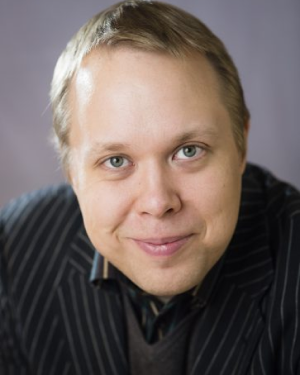
Evolution and Design: Beyond “Mere Compatibility”
18 June — Rope Kojonen
Does evolution make it harder to see God’s wisdom in nature, or does life still “sing of its Creator” after Darwin? Rope Kojonen suggests that evolution and the idea of design in nature need not be in conflict. But, they also do not need to be harmonised purely based on faith. Following Asa Gray, and going beyond “mere compatibility,” he proposes that since evolutionary processes yield intricate, functional order, the question arises whether nature was designed to evolve such outcomes.
Building on Rope’s The Compatibility of Evolution and Design (Palgrave, 2021), he will examine Gray’s insight with reference to recent work in evolutionary theory and the philosophy of conjunctive explanations. He will cover ideas about convergence, constraints, morphospace, and analogies from algorithms. He will also consider common objections, such as the role of randomness and contingency in evolution, and appeals to Occam’s razor.
Rope will connect evolutionary science with broader themes in natural theology in a careful way. He suggests such a natural theology will indicate how intelligibility, order, and fruitfulness in nature can be seen as part of a coherent Christian theology of creation and evolution.
Bio
Rope Kojonen is University Lecturer in Theology at the University of Helsinki, where his research focuses on science and religion, the philosophy of religion, and Christian theology. His books include The Compatibility of Evolution and Design (Palgrave, 2021) and Design Discourse in Abrahamic Traditions (Routledge, 2024). He is editor of the Finnish science and religion journal Areiopagi.
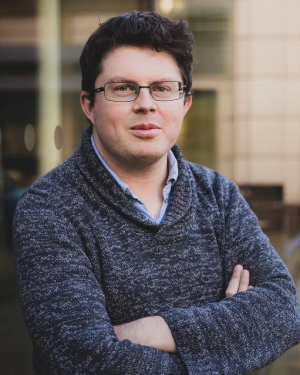
Does evolution follow a blueprint? The return of structuralism and potential implications.
25 June — Zachary Ardern
The Modern Synthesis, which provided a mathematical framework for evolutionary theory, emphasises chance mutations and natural selection as jointly sufficient to explain evolution. Structuralism, an older approach to evolutionary biology, instead emphasised the additional important role of internal or structural constraints. The role of such “underlying principles” of evolution aside from chance mutations or natural selection has gained increasing attention in the technical literature and some popular accounts. Zachary Ardern will summarise some relevant recent developments in evolutionary theory and some new opportunities for re-engaging evolutionary biology with teleology.
Bio
Zachary Ardern is a research fellow in evolutionary genomics at the Wellcome Sanger Institute in Cambridge, where he investigates the origins and evolution of new genes in bacteria and viruses. Originally from New Zealand, he completed his PhD in experimental evolution at the University of Auckland, having studied biology, philosophy, and economics. He is a founding member of New Zealand Christians in Science and was awarded the Oliver Barclay Lecture by Christians in Science in 2022 for his public communication on science and faith.
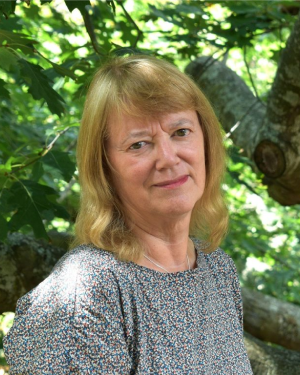
A Theological Reflection on Changes in Evolutionary Theory
9 July — Nicola Hoggard Creegan
There has always been a diversity of understandings of evolution, but throughout the last century, anything that deviated from neo-Darwinism and the Central Dogma was a minority opinion that did not touch mainstream teaching or dominant currents of thought.
The paradigm began to shift with the decoding of human and other primate DNA. There were also ideas about self-organising molecules, feedback from the environment to the genome, the interruption of ID, the revival of epigenetics, and the importance of viral inserts and co-option in evolutionary change. These developments came to a head in a rush in the first decade of the twenty-first century. The most important changes were perhaps the publication of Life’s Solution by Simon Conway Morris and the idea that hidden constraints were guiding evolution towards certain solutions, together with the breakthrough from animal science affirming that deep sympathy and altruism in mammals were perhaps more important than competition as an evolutionary driver. Conway Morris affirmed the possibility of telos in evolution directly. The other changes, while not proving the existence of a Creator, do make that possibility more coherent.
Bio
Nicola is a theologian and Director of New Zealand Christians in Science, based at Maclaurin Chapel at the University of Auckland. She specialises in the interface between evolutionary theory and systematic theology, with broad interests in all issues of public and contextual theology and ecology. She is the author of Animal Suffering and the Problem of Evil (OUP, 2013) and co-edited Creation and Hope (Wipf & Stock, 2018). She was a part of the Human Nature Project at CTI in Princeton, 2012-2013, and the Human Distinctiveness Project at Notre Dame 2015-2016. Nicola has taught theology in the US and NZ. Her doctorate is in theology, but her original training was in mathematics and biology. She is the current Chair of A Rocha Aotearoa New Zealand, a Christian environmental NGO.
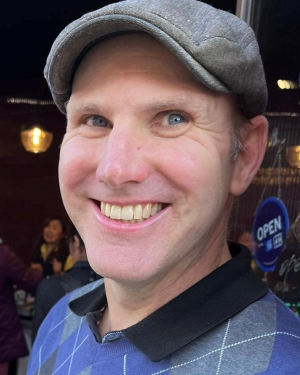
Examining Photosynthesis Through the Lens of Natural Theology
16 July — Trevor Rapson
Photosystem II, the molecular engine at the heart of photosynthesis, sustains all complex life on Earth through its own continual destruction. Trevor Rapson argues this paradox is not a design flaw but a fingerprint of the self-giving God who made it. Drawing on the science-engaged theology of Alister McGrath, he examines how the remarkable fine-tuning of Photosystem II resonates with Christian theism, and how its self-sacrificial function echoes the kenotic, self-giving nature of the Triune God. While not seeking to prove God’s existence, this talk shows how reading nature through a theological lens can deepen both scientific understanding and Christian faith.
Bio
Trevor Rapson is a Senior Research Scientist within CSIRO Agriculture and Food. He completed a PhD in Bioinorganic Chemistry at the University of Queensland in 2009.
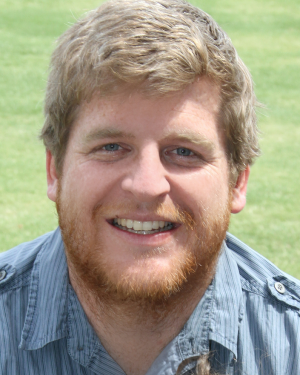
Does God Play Dice? Chance, Randomness and Evolution
23 July — Luke A. Barnes
It is 100 years since Albert Einstein wrote in a letter to fellow physicist Max Born: “I, at any rate, am convinced that God is not playing at dice.” Scientists regularly invoke chance and randomness in explaining features of the natural world. What are we doing? Has physics finally settled the question of whether the universe is playing a game of chance? And does this shed any light on randomness in biology?
Bio
Luke A. Barnes is a senior lecturer in physics at Western Sydney University, with a Ph.D. in astronomy from the University of Cambridge. His research focuses on cosmology, galaxy formation, and the fine-tuning of the universe for life. He is the coauthor with Prof. Geraint Lewis of A Fortunate Universe: Life in a Finely-Tuned Cosmos and The Cosmic Revolutionary’s Handbook, both published by Cambridge University Press.