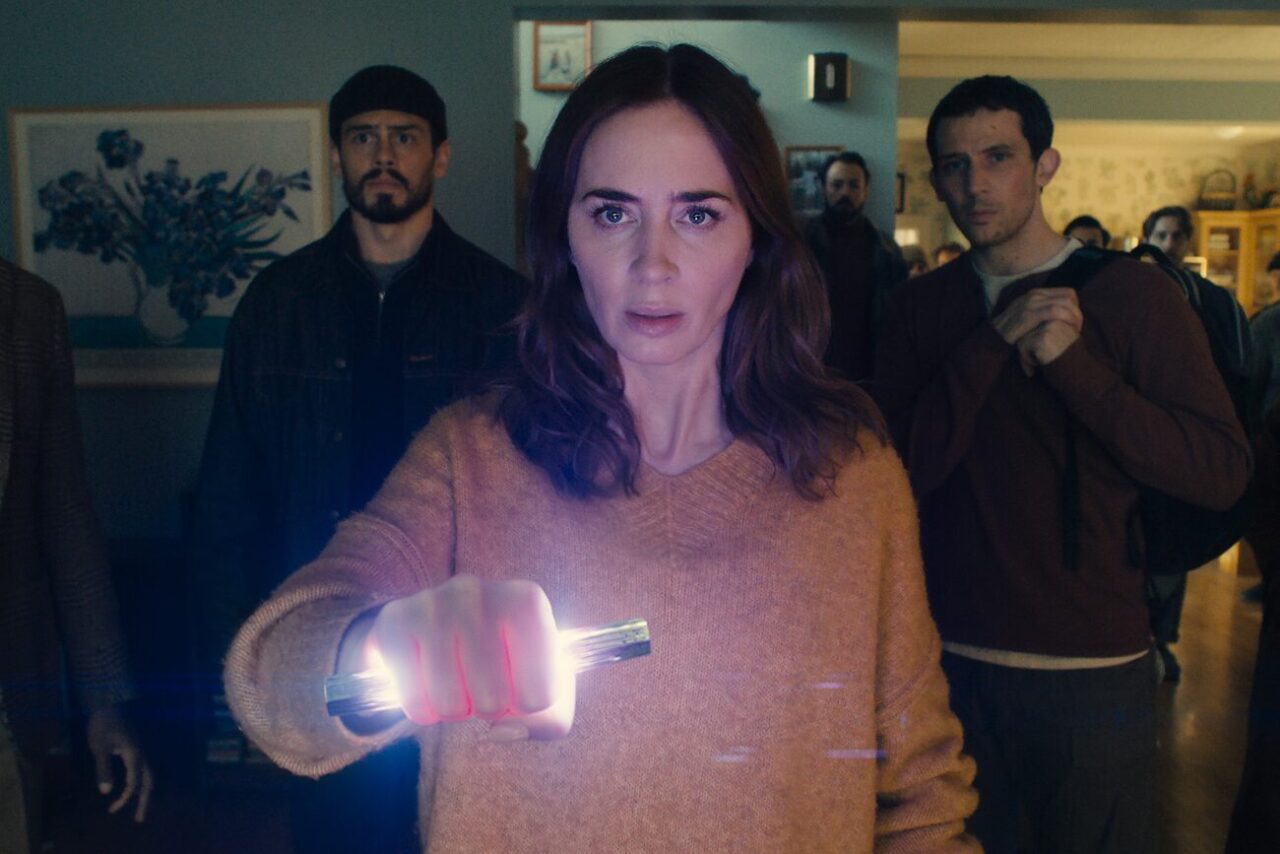
Disclosure Day is the third film directed by Steven Spielberg, after Close Encounters of the Third Kind (1977) and ET the Extra-terrestrial (1982), to deal with a first encounter between human beings and alien visitors where the aliens are not hostile but are wanting to communicate with people. The premise of this film is a shadowy conspiracy to keep the first contact a secret (perpetuating the Roswell mythology) for fear of its impact on humanity. Still, there are those who know and are working to let the world know. Enter our two main characters, a cybersecurity specialist Daniel (played by Josh O’Connor) and a TV meteorologist Margaret (played by Emily Blunt), who have, unbeknown to either one, been endowed with enhanced abilities by the aliens, the first with advanced maths ability and the second with extraordinary empathy. Their abilities become pivotal in exposing the conspiracy and revealing the truth of our first alien contact to the world.
As with most science fiction stories, one needs to suspend disbelief to accept the unfolding series of events, but below the action Spielberg has various characters raise questions about the religious impact that discovering the existence of aliens might have on humanity. Much of the theological discussion among the characters remains pretty shallow. The major concern raised is that aliens with extraordinary powers would be seen as gods, leading to a loss of faith in God. The most overtly religious character, a Catholic nun, makes it clear her faith would not be shaken by such a “revelation.” Anyone who understands God as the creator of the universe would not be shaken to learn of the existence of other intelligent beings in that universe, as vast and complex as it is. It would raise all sorts of interesting questions for Christians about the scope and necessity of salvation, the presence or absence of divine revelation in alien civilisations, and so on. However, these are not explored or even touched upon in the film.
Perhaps the more important theological question is not about God but about what it means to be human. At a time when people are discussing the potential for AI to mimic human intelligence and asking what that might imply, Spielberg puts forward two “types” representing what being human might mean: the cyber-expert Daniel represents calculative intelligence while the TV meteorologist Margaret represents the whole affective dimension of human life, captured by empathy. Two other sci-fi films play off the same theme. In the film Arrival, starring Amy Adams and Jeremy Renner, the two central characters represent scientific (Renner’s physicist) and emotional intelligence (Adams’ linguist) in communicating with the aliens. In Contact, starring Jodie Foster and Matthew McConaughey, the genders are reversed with Foster representing scientific rationality and McConaughey appealing to faith. In each case, calculative scientific reason cedes superiority to a fuller notion of what being human truly means. The empathy of Margaret, brilliantly played by Blunt, is the real superpower in the film.
Spielberg clearly has his eye on current debates in the US and elsewhere about the need for empathy. With the techno-bros of Silicon Valley railing against empathy as destructive of human (technological) progress and (white) Western culture, Spielberg is making a political statement. Empathy, compassion, and caring are central to our human existence. These values can be found in many religious traditions, but notably in Christianity and Spielberg’s own Jewish tradition. The final word spoken in the film, by Blunt’s character, is “Listen.” Perhaps Spielberg is deliberately echoing the great Jewish prayer, Sh’ma Yisrael, “Listen, Israel” (Deut. 6:4). Listening to God, listening to one another, to those at the margins whom Jesus calls “neighbour,” is the heart of empathy, compassion, and caring, of being human. To my mind, this is the central religious message of the film.
Read more: Sarah Wynn-Williams: “Careless People: A Story of Where I Used to Work”
More Reviews