Book reviewed by Robert Brennan, October 2025
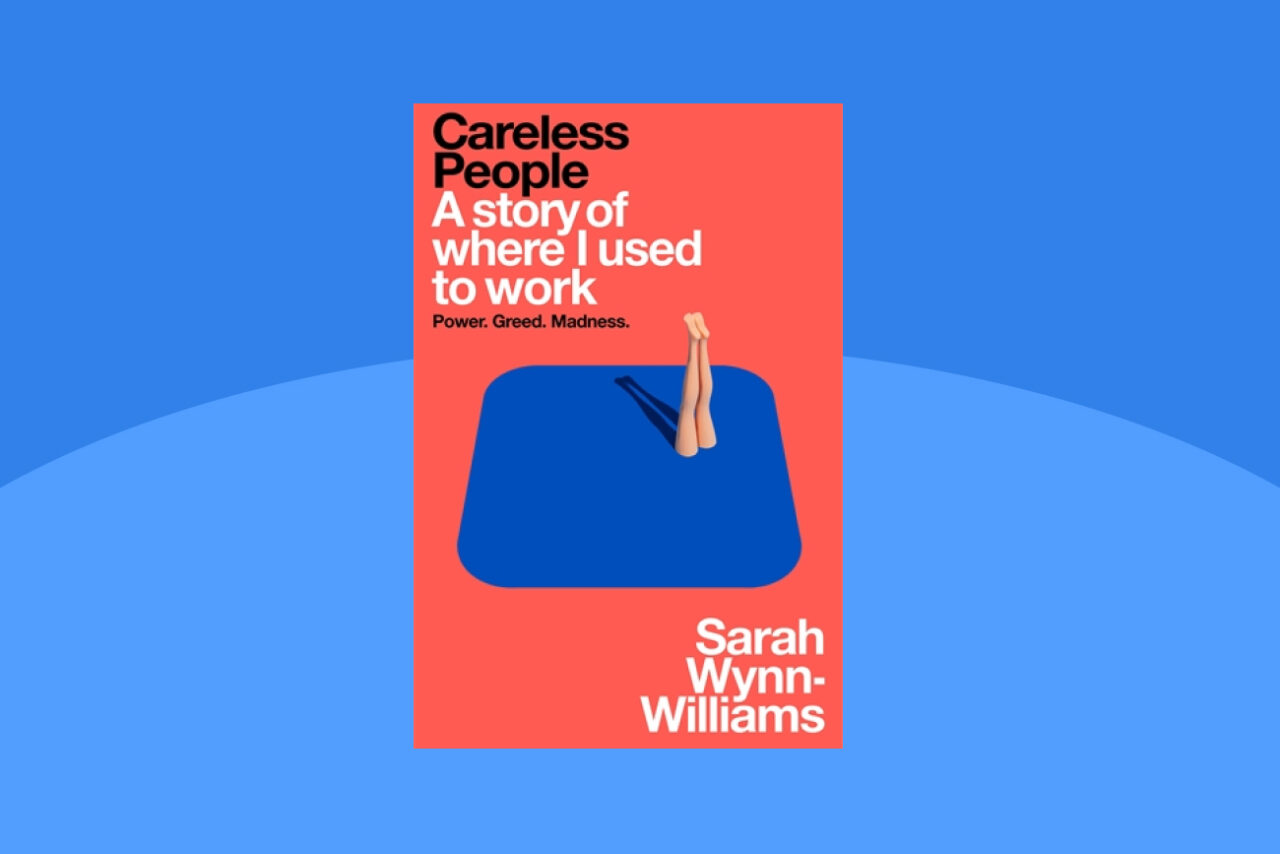
Careless People: A Story of Where I Used to Work
by Sarah Wynn-Williams
London: Pan Macmillan, 2025; 385 pages
ISBN 9781035065936, first edition, paperback
AU$28
Sarah Wynn-Williams is a New Zealand born diplomat passionate about making the world a better place. Careless People is about her journey in policy development for Facebook while working with its most senior people.
Facebook helped people contact each other in the aftermath of the 2011 earthquake in Christchurch, New Zealand, and this fuelled her passion that Facebook had the potential for positive change in the world. With this conviction she pitched for her job—but, as Wynn-Williams alleges, it was to people who could not even see the need for such a position. This was the first form of careless, naïve ignorance. The leaders of the company were so focused on the technological and financial issues that she found them to be unaware of the many potential concerns and problems the platform allowed through human behaviour, such as bullying and hate speech, as well as privacy issues. Later, most staff did not believe that the algorithm’s targeting of people with information and fake news could influence the US presidential election in favour of Trump’s first term. Following that election, she describes the shock and the further eager pursuit of more political advertising.
The term “careless” works a number of ways in her account. The second major way is of carelessness by neglect. Wynn-Williams gives many examples where the US cultural centricity left Facebook’s senior decision-makers unaware of major cultural and diplomatic concerns. One such example was the posting of a picture of the back of a world leader’s head which caused the leader anger because it was culturally disrespectful. An example with more serious consequences was that of Facebook’s involvement in Myanmar. Wynn-Williams was sent to Myanmar to negotiate internet communications to the country after the military government shut off Facebook. The story is bizarre. Her first hotel did not have a landline phone that could dial out. Forget mobile reception. She discovered that this regime had switched off Facebook regularly, but the company had no idea. Only the latest instance had come to the company’s attention.
Years later In Myanmar, Facebook was actively misused by anti-democracy forces and in the inciting of racial violence. Facebook’s policy banning hate speech could not be implemented because they only had one employee who spoke Burmese, based in Ireland! He was not able to respond in real time. Moreover, the company was unaware that many of the platform’s features did not work, including the “report an issue” button. When Wynn-Williams reported concerns, their technical people said it was not a problem because they had no reports.
The next major form of carelessness is being aware of serious consequences but denying or ignoring them—because in the end it will not affect them personally. Wynn-Williams writes about a South American Facebook executive who was jailed because the company did not do what that government wanted. Rather than try to get him released, Wynn-Williams describes how Facebook’s CEO tried to use this as a moment to put up a post to make Facebook look good. It would have made their employee’s situation worse. She recounts that it took a lot of convincing to stop the CEO making things worse. This became more complicated because he refused to be challenged or corrected on anything. Later, the CEO barely acknowledged the jailed executive when he met him.
How do you dialogue with a CEO who will not listen? How do you explain complex issues when he will not read any briefing longer than a short text message? How do you arrange meetings with world leaders who have limited time when your boss will not get up before midday? Wynn-Williams recalls many such examples. She writes also about her direct boss, a self-promoting feminist icon who claimed one thing while doing the opposite. Her boss claimed women should be able to mix career and family life. Wynn-Williams’ experience with her was counter to that: work was all.
It came to light in Australia that Facebook’s marketing algorithm targeted vulnerable young people. When this strategy was exposed and Facebook confronted, a junior staff member was scapegoated and the marketing people were genuinely shocked—they thought this was a good business model to sell advertising. Fortunately, regulatory changes in countries such as Australia, to prevent children from accessing social media, will soon be administered to protect society’s most vulnerable people. But it is sobering to realise how little this tech giant cares, and one wonders (and worries) how little effect the new regulations may actually have.
Wynn-Williams is an engaging writer. Her account is darkly funny and intensely personal. She engages the reader at the beginning with her story of surviving a shark attack in remote New Zealand in spite of questionable medical care—they stitched her superficial wounds and sent her home to develop severe peritonitis. This story sets a common theme through the book, that of experts not doing their job. The experts (Facebook executives) regularly did not look deep enough nor considered consequences. Protect the privacy of criminals—why would governments get angry? Avoid paying taxes—why would that upset governments? Be slow to take down hate speech—why would that matter?
There is an amusing story of the first international meeting she convinced the CEO to attend in Central America. Here, they escaped a disastrously bad official dinner and ended up in the middle of nowhere. Further, there were crazy plans developed on the fly on the company jet. One idea was made up on the spot during a major speech: to provide the internet to refugee camps. Yet, nobody in the company had any idea how to do that.
She recounts her fears when she was sent to the world’s worst Zika virus hotspot (infection spread via mosquito vectors) in South America while pregnant with her first child. The company did this without a care. This contrasts with the extreme measures the CEO took to avoid infection when he went to the same city later. That included an inconvenient full body suit that he ended up taking off.
But her account becomes gradually darker, a slow journey to disillusionment. She recounts many red flags. Most people would, like her husband and doctor, be appalled that she was responding to work emails on her laptop in the delivery room while in labour with her first child. This is dehumanising. It gets worse than this. She received a negative performance review for being “unresponsive” to work emails while in a coma after the birth of her second child. Eventually she was let go after reporting the same senior staff member who reviewed her, for sexual harassment.
Her job was to set policy and make Facebook leadership aware of the consequences and complications of their decisions. How do you do that when the senior leadership does not care about anything except expanding the company reach and company earnings? She found herself being seen not as a “team player” even though she and others were trying to head off bigger problems later on. In fact, she was getting sidelined. Her responsibilities were reduced to responsibility for Facebook in Asia. She makes clear to readers that working with a totalitarian regime and what she claims as Facebook’s enabling of that government’s monitoring of their people, was and is morally repugnant.
Obviously, stories are recounted from Wynn-William’s perspective. However, they have the ring of credibility. If only a tenth of what Wynn-Williams writes is true, then matters are grave indeed.
This is an important book everyone should read. It probes the interface of technology and morality. Technological advancement without regard for moral or spiritual concerns leads to worse human behaviour and worse human outcomes. A US congressional report condemned Facebook in relation to China like this: “While technologically and financially you are giants, morally you are pygmies.” Wynn-Williams’ account suggests that even this may be an overestimation of their moral capacity.
More Reviews